Akira Manga Volumes: All 6 Books in the Complete Series
If you came here wondering how many Akira manga volumes there are, the answer is simple: six. The entire story is finished, collected, and waiting for you. No cliffhangers left dangling, no volumes still in production. Just one massive, complete manga from start to finish.
Let’s walk through every volume, the best edition to buy, and what owning the full set actually looks like.
All 6 Akira Manga Volumes (120 Chapters, Completed)
Akira spans exactly 6 volumes and 120 chapters. Created by Katsuhiro Otomo, the series was originally published chapter by chapter in Weekly Young Magazine, a Japanese manga anthology magazine, before being collected into volumes by Kodansha in Japan. This chapter-by-chapter magazine publication — called serialization — is how most manga reaches readers before it gets collected into the books you see on shelves. The English edition is published by Kodansha Comics (Kodansha’s international publishing arm) and also comes in at 6 volumes — meaning the English books use the exact same volume divisions as the Japanese originals.
The series is completed. There’s no ongoing serialization, no sequel volumes on the horizon, and no “Part 2” to wait for. You pick up Volume 1, you read through Volume 6, and you’ve experienced the whole thing.
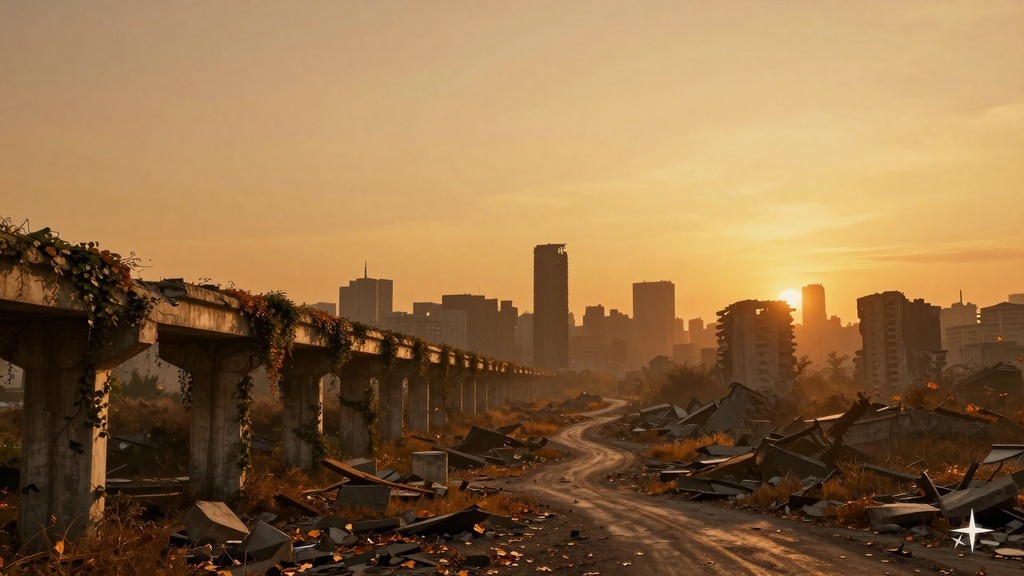
For anyone unfamiliar with the premise: Akira is set in Neo-Tokyo, a sprawling metropolis rebuilt after a catastrophic explosion leveled the original city. A teenage biker gang member named Tetsuo stumbles into a secret government project involving children with terrifying psychic abilities — and a mysterious subject known only as “Akira.” What follows is a story about power, destruction, friendship pushed past its limits, and a city tearing itself apart. It’s one of the most influential manga ever created, and the scope of Otomo’s vision is staggering.
If you’ve seen the 1988 animated film and assumed you know the story, the manga goes far beyond what the movie covers. The film adapts roughly the first half of the plot and then compresses the rest into a different ending. The manga’s full 6-volume run tells a much larger, more layered story. Whether you watch the film first or read the manga first is entirely up to you — they’re different enough that neither spoils the other — but the manga is the definitive version of the story.
All 6 Akira Volumes at a Glance
Each volume of Akira is dense. These aren’t slim collected volumes you can breeze through in an hour — they’re hefty, oversized editions packed with Otomo’s incredibly detailed artwork. Here’s what each volume covers, keeping things spoiler-light:
| Volume | JP Release Year | What Happens (Spoiler-Light) |
|---|---|---|
| Vol 1 | 1984 | Introduction to Neo-Tokyo, Kaneda’s biker gang, Tetsuo’s fateful encounter with a psychic child, and the first hints of the Akira project |
| Vol 2 | 1985 | Tetsuo’s powers escalate rapidly; the military scrambles to contain him; political tensions within Neo-Tokyo deepen |
| Vol 3 | 1986 | The major turning point of the series — Neo-Tokyo is devastated in a catastrophic event that redefines the entire story |
| Vol 4 | 1987 | The aftermath: new factions rise from the ruins, survivors reorganize, and the power struggle over Neo-Tokyo’s future begins |
| Vol 5 | — | The Great Tokyo Empire takes shape; multiple conflicts converge as different groups fight for control |
| Vol 6 | — | The final confrontation — everything comes to a head, and the story reaches its conclusion |
A few things worth noting about the pacing: Volumes 1 through 3 build tension at a breakneck pace and culminate in one of the most striking turning points in the entire series. Volumes 4 through 6 shift gears into a survival story set in a ruined, lawless Neo-Tokyo — a world where civilization has collapsed and different factions are fighting over what comes next. Some readers find the second half slower, but the payoff in Volume 6 ties the whole thing together.
Don’t expect a quick read. Each volume will take you a while to get through, and Otomo’s art rewards you for slowing down and really looking at every panel.
Which Edition Should You Buy for a Complete Set
If you’re buying Akira in English today, the edition you want is the Kodansha Comics release. This is the current edition still being manufactured and sold new, and it collects the series in 6 volumes that match the original Japanese publication structure.
These are large-format books. Each volume is physically bigger than a standard manga volume — wider, taller, and significantly thicker. The paper quality is solid, and the oversized pages give Otomo’s meticulous artwork the space it deserves. When people talk about manga as a visual art form, Akira is one of the first examples they point to, and these editions do the detailed drawings justice.
A Quick Note on Older Editions
You might come across references to two earlier English releases:
- Epic Comics edition (Marvel’s Epic imprint): This was the first English-language release of Akira, published as individual comic-book-format issues starting in the late 1980s. Notably, these were colorized — Steve Oliff’s coloring was groundbreaking for the time and won awards. However, these individual issues are long out of print and now sell for significantly higher prices on the secondhand market.
- Dark Horse edition: Dark Horse later published Akira in collected volumes as well. These are also out of print.
The Kodansha Comics edition is the one you’ll find on shelves and available through retailers today. It presents Otomo’s artwork in its original black and white, which is how the manga was drawn and published in Japan. If you’re used to the colorized look from the older Epic single issues or from images floating around online, be aware that the current standard edition is uncolored — and it looks fantastic. Otomo’s draftsmanship is so precise and detailed that the black-and-white art has a clarity and impact that color sometimes actually obscures.
Unless you’re specifically collecting vintage editions, the Kodansha Comics release is the way to go. It’s readily available, it’s a faithful presentation of the original work, and it’s the edition that new readers are picking up.
What a Complete Set of Akira Costs
Buying all 6 volumes of Akira new is an investment, but it’s a reasonable one for what you’re getting. These are oversized, high-page-count books, so each volume carries a higher retail price than a standard manga volume. Expect each volume to have a list price in the range typical for oversized manga editions — check current retailer listings for exact pricing, as it can shift over time.
Individual Volumes vs. Box Set
Akira is primarily sold as individual volumes. If you’re building the set piece by piece, you can spread the cost out — grab a volume or two at a time and work through the series at your own pace. This is a perfectly good approach, and it means you’re not committing to the full set upfront if you want to test the waters with Volume 1 first.
For box set availability, check current retailer listings — availability of bundled sets can vary over time.
Used Market
Akira holds its value on the used market. The Kodansha Comics editions can sometimes be found secondhand at a slight discount, but don’t expect steep markdowns — this series has consistent demand. Older Dark Horse and Epic editions can sell for well above their original cover prices on the secondhand market, especially in good condition.
Digital as a Budget Option
If physical copies are outside your budget or you just prefer reading on a screen, Akira is available digitally through platforms like Amazon’s Kindle store, Apple Books, and other major e-book retailers that carry manga. Digital editions are typically priced lower than their physical counterparts and have the obvious advantage of taking up zero shelf space. The tradeoff is that you lose the oversized format, and Otomo’s art genuinely benefits from being seen on a large physical page. But digital is a completely valid way to experience the story — reading Akira in any format beats not reading it at all.
Where to Buy Akira in English
The Kodansha Comics edition of Akira is widely available through major retailers. Here’s where to look:
Online Retailers
Amazon carries the full Kodansha Comics lineup of Akira volumes. If you’re starting from the beginning, Volume 1 is the place to jump in — it introduces Neo-Tokyo, Kaneda, Tetsuo, and the Akira project.
Akira Vol.1 (Kodansha Comics)
Other major online bookstores also stock the series. Shopping around between retailers can sometimes turn up better availability, especially if a specific volume is temporarily out of stock at one store.
Physical Bookstores
Large bookstore chains typically carry at least some Akira volumes in their manga sections. Manga specialty shops and comic book stores are also good bets — Akira is a perennial title that most shops keep in stock.
Digital Platforms
For digital copies, platforms like Amazon’s Kindle store, Apple Books, and Google Play Books all carry Kodansha Comics titles. Reading on a tablet gives you the closest experience to the oversized physical format, though even a phone screen works in a pinch.
One Important Tip
When buying, make sure the edition you’re getting is the Kodansha Comics release — look for the Kodansha Comics logo on the cover and spine. This is the currently available edition being sold new. If you accidentally order an older Dark Horse printing expecting a new book, you might end up with a used copy at a premium price, or a listing that doesn’t match what arrives. The Kodansha editions have distinctive cover art and are easy to identify once you know what to look for.
Why Akira Is Worth Owning as a Complete Set
There are manga you can dip into casually, read a few volumes of, and walk away satisfied. Akira is not one of them. The story is built as a single, continuous narrative thread across all 6 volumes — one story with a beginning, middle, and end — and the ending recontextualizes much of what came before. Reading only the first few volumes is like watching the first act of a movie and leaving the theater — you’ll have seen some impressive things, but you won’t have experienced what the work is actually about.
The Ending Earns Its Weight
Without spoiling anything: Volume 6 takes the story to a place that is thematically ambitious in ways that the earlier volumes only hint at. The final confrontation isn’t just about who wins a fight — it grapples with ideas about evolution, destruction, creation, and what it means for humanity to survive its own power. It’s the kind of ending that makes you sit quietly for a minute after you finish reading. Reading all 6 volumes is what gives that ending its impact.
The Art Is a Reason to Own Physical Copies
Katsuhiro Otomo’s artwork in Akira is astonishing. The level of architectural detail in his cityscapes, the kinetic energy of his action sequences, the expressiveness of his character work — it’s all executed with a precision that very few manga artists have ever matched. Every page is dense with visual information.
This is one of those rare manga where the physical edition genuinely offers something the digital version can’t fully replicate. The oversized Kodansha Comics format lets you see the intricacy of Otomo’s detailed drawings at a scale that does them justice. Panels that might look cluttered on a phone screen reveal incredible depth and clarity on a large printed page. If you care about manga as a visual medium, Akira is a series worth having on your shelf.
Cultural Significance
Akira is one of the works that introduced manga to Western audiences in a serious way. Alongside the 1988 animated film, the manga helped demonstrate that comics from Japan could tell stories with the scope, ambition, and artistic sophistication of any literary or cinematic work. Its influence reaches into film, animation, music, fashion, and countless other manga and comics that followed.
Owning the complete set isn’t just about having a good story on your shelf — though it absolutely is a good story. It’s about having a piece of manga history. The kind of work that, decades after its original publication, still feels vital and ahead of its time.
Six volumes. One hundred twenty chapters. One complete story. Go read it.